Thursday, February 08, 2007

Blogging the Wolfe Book, Our Story So Far

Larry Harnisch (described by James Ellroy as a Dahlia scholar/Dahlia freak, take your pick) is blogging in real time as he reads Donald H. Wolfe's "The Black Dahlia Files: The Mob, the Mogul and the Murder That Transfixed Los Angeles."

Part 1, Blogging the Wolfe Book
Part 2, The Monster
Part 3, Extra! Extra!
Part 4, Sniff Test
Part 5, Weather Report
Part 6, The Boy on the Bicycle
Part 7, A "C" From the Health Inspector
Part 8, Neutral Milk Hotel
Part 9, A Moment of Silence, Please
Part 10, The Riddler

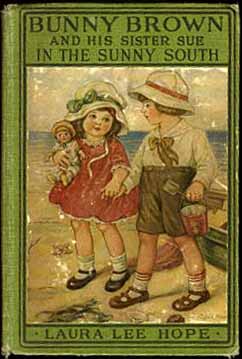
And this, not the Wolfe book, but something more enduring, an installment in the "Bunny Brown and His Sister Sue" series, one of my mother's childhood favorites.
Part 11, The Thrill Is Gone
Part 12, I'm My Own Grandpaw
Part 13, The Subject Is Roses
Part 14, Teutonic Thoroughness
Part 15, Time for a Reality Check
Part 16, a Moment of Silence
Part 17, The Lookies
Part 18, Uncle Vern
Part 19, The Houyhnhnms
Part 20, The FBI Story
Above, another of my mother's favorite childhood books.
Part 21, The Cloudy Crystal Ball
Part 22, The Funny Papers
Part 23, The Pinata
Part 24, He Walked by Night
Part 25, Loyalty
Part 26, Missing Man Formation
Part 27, Collecting Our Thoughts
Part 28, A Rain Check
Part 29, Wreck of the Old 97

Part 30, Tick, Tick, Tick

Part 31, Phoning It InMedium Image
Part 32, Foxy Grandpa
Part 33, Pied Type
Part 34, Limbo
Part 35, Paint by Numbers
Part 36, Bust of a Man
Part 37, Mystery Woman
Part 38, Slasher Flick
Part 39, Aiding and Abetting
Part 40, Who Was That Masked Man?
Part 41, The Whole Nine Yards
Part 42, The Face Is Familiar
Part 43, Our Far-Flung Correspondents
Part 44, Honored Guests


Large Image
Part 45, Nothing but Compost
Part 46, Snooze Alarm
Part 47, Wax On, Wax Off
Part 48, An Army of One
Part 49, Family Ties
Part 50, Trying to Make It Real Compared to What
Part 51, Slinging Hash
Part 52, The Numbers Game
Part 53, Imagine My Surprise
Part 54, Tell It to the Marines
Part 55, Evil Genius
Part 56, The Lady in Red
Part 57, Lines of History
Part 58, The Countdown Begins
Part 59, Pleas and Thank-Yous
Part 60, Deuteronomy 33:24
Part 61, Request Line I
Part 62, Request Line II
Part 63, Request Line III
Part 64, Request Line IV
Part 65, Request Line V
Part 66, Request Line VI
Part 67, A Mystery Solved
Part 68, Request Line VII
Part 69, Courtesy Card
Part 70, Request Line VIII
Part 71, Request Line IX
Part 72, How to Fake a Document
Part 73, The Old Spuriousity Shoppe
Part 74, Request Line X
Part 75, Request Line XI
Part 76, Request Line XII
Part 77, Request Line XIII
Part 78, Request Line XIV
Part 79 (I can't believe it myself), Request Line XV
Part 80, Request Line XVI
Part 81, Request Line XVII
Part 82, L.A. Abortions in the 1940s
Part 83, Request Line XVIII
Part 84, Request Line XIX
Part 85, Request Line XX
Part 86, Request Line XXI
Part 87, Request Line XXII
Part 88, The Two-Minute Executive Summary

free page hit counter

Labels: , , , , , ,

Monday, February 05, 2007

Centennial Ramblings


Feb. 5, 2007
Sierra Madre

Because it’s celebrating its centennial this month, I paid a visit to Sierra Madre and while savoring a cinnamon dolce latte at the local Starbucks, watched the sun set on a historic Union 76 ball. A perfect fusion of two projects.

And here’s Sierra Madre’s Old North Church, with the artillery piece in the park across the street. Note the problem I encountered with lighting. Architectural photography is surely not my forte.

Now for the business at hand. I’ve often thought that with a century of lawmaking under its belt, the state Legislature might want to take the afternoon off. After all, with more than a century of making laws, what’s left to regulate?

The Times provides a tidy answer to my question:

· The Senate unanimously passes a ban on docking horses’ tails and prohibits anyone from bringing horses with docked tails into the state. Those who own horses with docked tails would have to register them with the local county officials.

· The Senate passes a bill authorizing the governor to declare “Bud and Arbor Day.”

· The Senate passes a bill setting dairy standards and a bill to keep the polls open from 6 a.m. to 6 p.m.

· A committee urges the Senate to pass Sen. Black’s tax exemption bill for all the buildings at Stanford as well as the bonds the university holds in trust.

· Sen. Wolfe introduces a bill making all robberies committed with a deadly weapon between sunset and sunrise punishable by death or life in prison.

· Assemblyman Grove L. Johnson introduces a “no seat, no fare” bill providing that railroad passengers who cannot find a seat need not pay. The bill would include streetcars.

· Assemblyman Johnson introduces a bill requiring firearms dealers to keep records of gun buyers’ names and addresses.

· The Assembly passes a bill by the late Assemblyman Burke making it illegal to spit on sidewalks or in trains, cars and other public conveyances.

· Sen. Sanford introduces a bill seeking to restrict corporate donations to political campaigns. I’m so glad the Senate wrapped that up 100 years ago so it can get on to more pressing matters.

Lmharnisch.com
Lmharnisch.blogspot.com

E-mail: lmharnisch (AT) gmail.com

Labels: , , , , , , ,

Saturday, December 16, 2006

Adios Judy!


Judith Regan, the publisher of Donald H. Wolfe’s “The Black Dahlia Files,” has found a way to make Page 1 of The Times: Get fired by HarperCollins. (The New York Times story is here.)

I’m trying not to gloat. But it’s a challenge. As we used to say at my little old paper, The Arizona Daily Star, in a riff on the standard line in fire stories: “Champagne corks flew hundreds of feet into the air and could be seen for miles.”

By the way, I’m still waiting to hear from Wolfe about his bogus document.

Labels: , , , ,

Wednesday, June 07, 2006

Shout Out

General Motors (198.208.251.24) Windows 2000? Upgrade!

The Netherlands (212.127.246.72)

E! Entertainment (12.46.6.69) “E! Mysteries and Scandals,” my first TV interview, by the guy who did “Real Chases of the Highway Patrol.”

Department of Veterans Affairs (152.130.6.194)

My pal in Kerkira, Greece (213.80.115.71)

Simpson Thacher and Bartlett llp (64.167.72.50)

And no, I still haven’t heard from Donald H. Wolfe about his bogus document. Something tells me I’m not going to.

Here’s a factoid for you: Olga Rutterschmidt, who is being held on suspicion of an insurance fraud scheme involving the deaths of two homeless men, lives at 1776 N. Sycamore in Hollywood, the site of Bobby Fuller’s mysterious death in 1966. A building with seriously bad mojo!

Hurry back!

Lmharnisch.com

Labels: , , , , ,

Monday, May 01, 2006

Blogging the Wolfe Book, The Two-Minute Executive Summary

From Feb. 3, 2006, to April 28, 2006, I devoted a daily blog to Donald H. Wolfe’s “The Black Dahlia Files: The Mob, the Mogul and the Murder That Transfixed Los Angeles.” In dealing with the 1947 murder of Elizabeth Short, Wolfe uses the “Laura” format, as in the Vera Caspary novel and Gene Tierney movie, in which the anonymous, butchered body is found and the narrative proceeds in flashbacks.

In checking Wolfe’s book against its sources and against the historic record, we have found lies, errors, fraud and plagiarism. We have found a heavy reliance on other books, notably Will Fowler’s “Reporters” and John Gilmore’s “Severed”—both of them extremely problematic—and the Los Angeles Examiner. In a survey of the book up to Page 73, these three sources constituted half of Wolfe’s source material. The district attorney’s files accounted for a mere 8% of the book.

Wolfe also relies heavily on two self-published books by disgruntled former police officers, Vincent A. Carter’s “Rogue Cops” and Charles Stoker’s “Thicker ‘n’ Thieves.” Note that despite Carter’s warning that he never worked the Dahlia case, Wolfe presents Carter’s statements as unimpeachable facts.

Did I mention the faked document?


We have seen Wolfe misrepresent what he uses from the district attorney’s files by suppressing the material that doesn’t fit his scenario and by altering other documents to bolster his case. In fact, Wolfe’s entire book is rendered impossible by the key district attorney’s document “Movements of Elizabeth Short Prior to June 1946,” which shows that she was never in Los Angeles in 1944 or 1945, a report that also demolishes the arguments of “Severed,” which is 25% mistakes and 50% fiction.

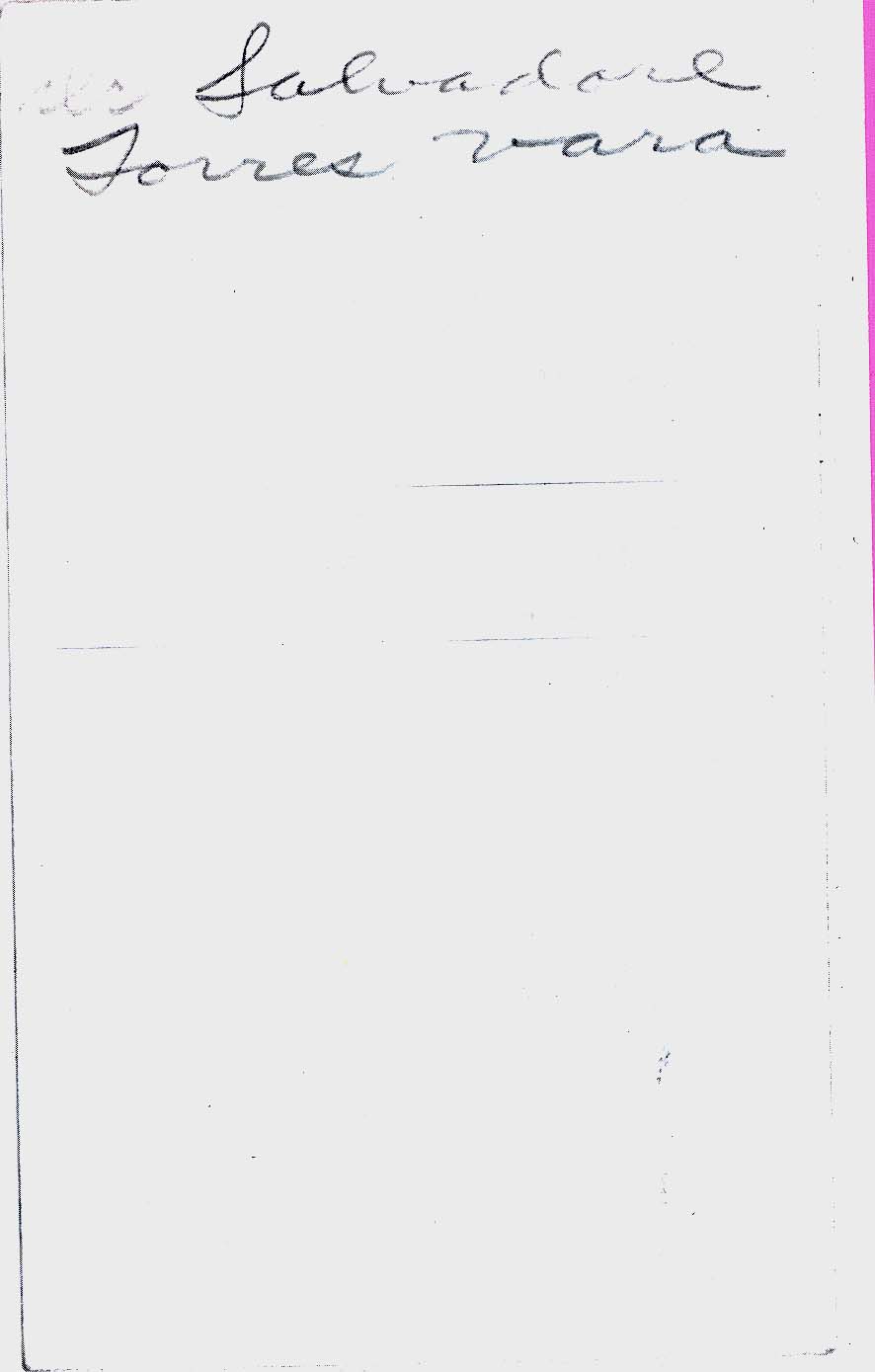
In other instances, Wolfe manipulates documents that refer to one suspect, Michael Anthony Otero, stating that they refer to Maurice Clement, who is described as “Brenda Allen’s procurer” without the slightest proof. Wolfe goes so far in misrepresenting the district attorney’s documents that he presents a photo, allegedly of Clement, that actually shows a different individual, Salvadore Torres Vara.

Wolfe also ignores and suppresses other documents that would destroy his case, notably an FBI memo on the actions of Bugsy Siegel on Jan. 14, 1947, the day before Elizabeth Short was killed, showing that Siegel was under FBI surveillance while in Los Angeles.

And then there’s the faked document, which Wolfe calls “The D Memorandum,” which was pasted together from two unrelated reports.

Without acknowledgement, Wolfe also lifts material word for word from my 1997 Los Angeles Times story on the Black Dahlia case and my website presenting the “director’s cut” of the 1997 story.

In short, Donald H. Wolfe’s “The Black Dahlia Files” is a conniving, cynical, cold-blooded literary fraud that exploits access to the Los Angeles County district attorney’s files to provide a veneer of authenticity to a vicious and entirely fictitious smear alleging corruption by hard-working, dedicated police investigators and prominent Los Angeles figures—who are conveniently dead and unable to defend themselves.

My dear Holmes! The haz-mat pile of Black Dahlia books is gone!

Exactly, Watson. They are all back in their lead-lined containers a mile under the desert outside Las Vegas, Nev. Until the next time I need them.


free page hit counter

Labels: , , , , , ,

Friday, April 28, 2006

Blogging the Wolfe Book, Request Line XXII


Large ImageI have ceased blogging in real time as I read Donald H. Wolfe’s “The Black Dahlia Files: The Mob, the Mogul and the Murder That Transfixed Los Angeles.” Wolfe uses the “Laura” format, in which the anonymous, butchered body is found and the narrative proceeds in flashbacks.

Now, I am taking a few requests before wrapping up the project. Today, we’ll look at Pages 345-357 at the request of Regular Anonymous Correspondent. Say your prayers, because I hope to conclude the Wolfe project this week.

Yesterday I got derailed
on Wolfe’s purported photo of poor old Maurice Clement (actually Salvadore Torres Vara) and excerpts of “Severed” author John Gilmore’s interview with Arnold Smith/Jack Anderson/Jack Wilson.

Sample:

J:
What do you mean?

A:
What?

J:
What do you mean do I think anyone can do that?

A:
Actually do that?

J:
Cut someone in half?

A:
Isn’t that what our relationship is all about?

J:
What’re you saying?

A:
I’m empty here and we are in the Sahara Desert.

J:
(Orders more drinks). Arnie, I’m not really clear right now. I just wish Al was here, was with us.

Today I’ll try to do better.

OK. Here we go. This section is Appendix B, titled “The Hodel Hypothesis.” The question here is how does one conspiracy nut disprove other conspiracy nuts? Hm. Does that seem too harsh?

Page 345

Oh! I love this already:

“In the investigative nonfiction books published about the Black Dahlia case, two authors accuse their fathers of being the pathological killer.”

Now there are lots of ways I would describe Janice Knowlton’s “Daddy Was the Black Dahlia Killer” (written with Michael Newton, by the way) but “investigative nonfiction” isn’t one of them. Knowlton was really crazy and it was easy to make fun of her while she was alive—she used to leave long, rambling voice mail messages on my answering machine. But once she killed herself I’ve only felt sorry for her. It’s an extremely tragic story.

I also wouldn’t describe Steve Hodel’s “Black Dahlia Avenger” as “investigative nonfiction.” “Dahlia Avenger” has a wonderful “high concept”: Retired homicide cop goes through his dead father’s belongings and discovers that dad was the worst serial killer in the city’s history.

The problem is that Hodel’s “high concept” disintegrates immediately. Greatly simplified, Hodel’s entire approach is to reverse-engineer his scenario from the assumption that his father, Dr. George Hodel, knew Elizabeth Short, based on two photographs found in George Hodel’s belongings. But it’s not enough to claim that he knew her, Steve Hodel also claims that his father killed her.

Elizabeth Short’s sisters say the photographs aren’t her, so we know the story is bunk. But instead of responding to that, Steve Hodel changed his story to say that it doesn’t matter because they only served to interest him in the case. In fact, whenever someone punches a hole in his theory, which is not especially difficult, given his reliance on vast, shadowy conspiracies, powerful people in high places and wheels within wheels of corruption (sounds like Donald H. Wolfe, doesn’t he?), he erects a massive bypass to explain it away until his whole scenario looks like network of leaky plumbing.

The bottom line is this: If you are a person who believes that having venereal disease is a worse scandal that committing murder, Steve Hodel’s theory is for you. Others may have problems with it.

Page 346

Ah. Busted again. Understand that Elizabeth Short’s family issued its statement on Hodel’s photos through me. Wolfe uses their denial, but attributes it incorrectly to the Los Angeles Times, July 11, 2003, Page 27. In fact, it appeared in L.A. Weekly.

By the way, Wolfe says the photo of Elizabeth Short on Page 347 was taken in 1946. I doubt that its date has ever been successfully verified. Note, however, that despite the myth that she only wore black, she is in a light-colored outfit.

Page 348

Wolfe raises the same point I do on my website about the absurdity of Steve Hodel’s claim that his father sent a telegram to Elizabeth Short in 1945, when it is actually dated 1944. Wolfe, however, gives the month as July, which I certainly can’t tell from my scan, nor from his.

Page 349

The Man Ray photo. Steve Hodel jumps through a series of hoops to show that the position of Elizabeth Short’s body was intended to duplicate a photo done in the 1930s for the cover of “Minotaur” magazine, a small prewar journal published in Paris.

However, the connection between George Hodel and Man Ray has been enthusiastically shot to pieces.

Wolfe also goes through Steve Hodel’s handwriting samples, comparing crackpot notes sent to the newspapers after the Black Dahlia murder (hence the incredibly uninventive name Black Dahlia Avenger) with writing on Jeanne French’s body.

This, of course, ignores the fact that homicide investigators found footprints on and around French’s body that revealed the killer’s shoe size—far too small to have been George Hodel. I mean, why bother with a more ephemeral and intangible science like handwriting analysis when you’ve got shoe prints to compare?

If the shoe doesn’t fit, you must acquit.

So I’m skipping all this handwriting mumbo-jumbo. If you think someone who was plastered and had just stomped a woman to death (he also used something like the handle of a socket wrench) did his best work writing “Fuck You” on a body in lipstick, this may be significant to you. Otherwise it’s best to move on.

Page 351

The phrase “brutally murdered” is one of my special pet peeves. Like there’s a nice way to murder somebody.

Then Wolfe deals with Hodel’s claim that his father killed Elizabeth Short at the house on Franklin. There’s zero to show that, by the way.

Wolfe is actually correct in stating that investigators suspected Elizabeth Short was murdered at the Astor Motel. But they discarded the theory after tearing the place apart.

Page 352

Wolfe shoots down the theory that Elizabeth Short checked into a hotel on Washington Boulevard. Hm. Looks awfully familiar, doesn’t it?

Page 355

Wolfe says that Dr. Hodel wasn’t a surgeon. That’s right. He wasn’t.

And except for any last questions should do it. I’ll probably tie things up with a summary and leave the site as it since interest will undoubtedly grow leading up to the release of the Black Dahlia movie, which was horribly panned by a review audience.

Here


And here


And here
.

Shout out to:

Simon and Schuster (198.4.159.6)

Chicago, Ill. (12.64.54.31) Windows 98? Upgrade!

And who is the dude in Kerkira, Greece?


free page hit counter

Labels: , , , , , ,

Thursday, April 27, 2006

Blogging the Wolfe Book, Request Line XXI


I have ceased blogging in real time as I read Donald H. Wolfe’s “The Black Dahlia Files: The Mob, the Mogul and the Murder That Transfixed Los Angeles.” Wolfe uses the “Laura” format, in which the anonymous, butchered body is found and the narrative proceeds in flashbacks.

Now, I am taking a few requests before wrapping up the project. Today, we’ll look at Pages 345-357 at the request of Regular Anonymous Correspondent. Say your prayers, because I hope to conclude the Wolfe project this week.

Let’s recap a couple of things. Yesterday’s post dealt with the issue of plagiarism in Wolfe’s book. Someone suggested that Wolfe and I used a common source, John Douglas. When I pointed out the chronology, the person said, well, maybe Douglas used my story and Wolfe picked up the material.

Sadly, no.

Here’s the chronology: I interview John Douglas in 1996 for a Los Angeles Times story on the 50th anniversary of Elizabeth Short’s murder. In fact, I spent about six months in 1996 researching the story, which was published Jan. 6, 1997. (Trivia time: It was only the second time in 50 years that the Black Dahlia case appeared on Page 1 of the Los Angeles Times).

Douglas and Mark Olshaker write “The Cases That Haunt Us,” published in 2000. (My proof copy is dated November 2000, to be precise). Although Amazon.com’s “search inside” feature isn’t offered for the hardback, it is for the paperback.

Donald H. Wolfe writes “The Black Dahlia Files,” published in 2005. He quotes my material, citing Douglas’ “Cases That Haunt Us.”

Let’s search for the key phrase “comfortable wallowing in blood,” which occurs in my 1997 story and was subsequently posted on my website. Notice that this key phrase does not appear in “Cases That Haunt Us.But we do find it in “Mogul.” Notice that Amazon’s search engine has a problem because “wallowing” is hyphenated as “wal-lowing.” So let’s check “Cases That Haunt Us for that. Oops. Not there.

How about “adept with a knife”? Nope, not in Douglas’ book either. But it’s in my 1997 L.A. Times story and “Mogul.”

Here’s another little goody I keep bringing up: Wolfe’s alleged photograph of poor old Maurice Clement. Here’s the page from the book up top. Since most people haven’t had my access to the district attorney’s files, I’ll tell you that in fact the photograph in question isn’t identified in the Elizabeth Short material.

But it is in the Jeanne French material. Behold: Salvadore Torres Vara. Note that he is identified as a doctor. Whether he was actually a doctor is a little vague. Vara was apparently some kind of scam artist who was working at Brittingham’s restaurant in Columbia Square. He was arrested for reasons I forget and was found to have an address book loaded with information on celebrities. As I recall, and my memory is a bit vague here, Mimi Boomhower (yet another of Dr. George “Evil Genius” Hodel’s purported victims according to Steve Hodel’s “Black Dahlia Avenger”) might have been in his book, along with folks like Jose Iturbi. It’s unclear whether Vara actually knew any of these people or if he was just a star-struck fan.

Oh! Here’s some more fun stuff.

Wolfe quotes the transcript of “Severed” author John Gilmore interviewing Jack Anderson Wilson on Page 316.

Now I happen to have a copy of this transcript (you knew I would, right?)

So Wolfe’s quote on Page 316 is actually on the last page of Gilmore’s transcript. Well sort of:

Wolfe version:

Gilmore: So it was willed

Wilson: In a matter of speaking. Everyone is entitled to go nuts. You said that yourself.

[Gilmore notes that Smith seems to go off into a trance-like state.]

Gilmore transcript:

Gilmore: So it was willed.

Anderson: In a matter of speaking

[page turn]

You know if you look at a map of the city, you see where she was put, where the body was placed, it is the only section in the city that is shaped like a woman’s pussy.

End of transcript.

Uhhhh. So where is “Everyone is entitled to go nuts. You said that yourself”?

Oh, that’s at the beginning of Page 13. The full quote is:

Anderson: He put rags in her mouth. He used her underpants and he knocked her out a few times. He had to do that when the spirit overtook him. But I told you this, and some of the rest of it I don’t know. It was so long ago. It’s only be [cq] chance that we’re talking now. You understand the trouble I could get into because of what he did, if he could somehow make it seem that he didn’t do it. You know what I mean. It’s like we’re talking about litigation and that sort of thing. Everyone is entitled to go nuts. You said that yourself. When was it?

Gilmore: I said that? Sounds like something I should’ve said.

And who on earth is “Smith” going into a trace-like state? Does Wolfe mean Anderson/Wilson?

Either way the trance-like state is all the way back on Page 1.

I can’t quote this entire thing. It’s too long. But I just have to share some of this:

Conversation with Arnold Smith first week in December 1981
Location: Harold’s 555 Main Street

A: You’ve been talking to me long enough to know what I’m talking about.

J: I don’t know. I mean I don’t exactly know what it is you’re saying.

A: The wood that was down in the back—boards this yea length like about this size here (showing width) and putting them goddamnit across the tub at this angle.

J: That’s what I told St. John. Arranged in such a way as to have the leverage or the space—supported in such a manner like you’re saying.

A: That was what I said.

J: There was the mention of the saw that was used—

A: There wasn’t a saw.

J: You said there was a meat saw that was used in the last part of the separation.

A: When did I say that?

J: You said that—when was it? Wasn’t it after Thanksgiving?

A: I said there was a saw?

J: Yeah, I wrote it down in the book.

A: I don’t remember...I don’t remember what he said about that. Maybe he said that. Is that right?

J: I don’t know. You’re the one telling me what he said about that. I know it was a long time ago.

(There is another round of drinks and we drink. He gets hazy like he’s in a trance).

Hm. And then Wolfe cuts to “Severed,” Pages 186-187 and then he goes back to Page 12 of the Gilmore transcript. Of course, Wolfe’s end notes don’t tell you he’s done that.

And how many rounds of drinks do they order? Hmmmm.

“Another round” is noted on Page 1, so I’m going to assume that’s at least the second. Another round on Page 3. Another round on Page 8. Another round on Page 9. That’s five rounds of drinks, folks.

I just love this part on Page 8.

J: I don’t know who you mean.

A: Let’s do it again, Johnny boy. (Another round of drinks.) So you’re going to give me the grand?

J: I said I would. We got the money back from the Santa Fe deal.

A: Don’t give me any fifties. Give it to me in tens.

J: Ten dollar bills?

A: Old money. I like old money.

J: I dig you. I said I would.

A: What’s that nigger looking at? You know that nigger?

J: No, I don’t. He’s just looking, I guess.

A: He said he was going to take her eyes out. You remember my telling you that?

J: Who, Morrison?

A: Who would’ve killed her? Who had a motive?

J: You meaning Al?

A: You’re not following the conversation.

J: Well that’s the part I’m trying to figure out, Al’s motive—But you said he didn’t have any motive. You told me that.

A: Except to know he couldn’t get his dick in her. And he lied. The fucker told me he did, and then I knew he was lying. What was it? A red bottle? Had a glass stopper you use for putting fancy perfume in. And he could’ve taken her eyes out with that. But you understand, that’s what he said. Because his mind was gone. You know, half those hoods had their mind eaten away because of syphilis. I swear to God, I know his mind was gone to have done what he did to her, and knowing he did it all along, but knowing it was just that he had to do it, you see what I am saying, so there was an excuse in part of this.

Got that?

Oh this is fun too: (Page 9)

A: What are we talking about? You’re the one doing the so called research into this? What do you think we’re sitting here talking about?

J: I just wish I had some idea as to why he cut the body in half.

A: That was the joke. You know how they said the surgical table and the hokus pokus rigmarole about cutting her in half? You think anyone can do that?

J: What do you mean?

A: What?

J: What do you mean do I think anyone can do that?

A: Actually do that?

J: Cut someone in half?

A: Isn’t that what our relationship is all about?

J: What’re you saying?

A: I’m empty here and we are in the Sahara Desert.

J: (Orders more drinks). Arnie, I’m not really clear right now. I just wish Al was here, was with us.

A: I haven’t seen him in years. I hope he’s dead.

Real smoking gun there, isn’t it?

And another of my favorite parts:

Transcript, Page 11

J: Listen, let’s go to that booth. I don’t want to sit here any more. I want to eat one of those. You want to go to the booth?

(at booth and drinking)

J: Here is two-hundred fifty dollars. I’m sorry one is a fifty but can you live with that? What I want to do is give you seventy-five Friday and it’ll be in ten dollar bills. Old ten dollar bills. I just got to clear up a couple of things.

A: What things?

J: What you said before. Down at the house.

A: What things in particular are you talking about, John?

J: Just the kind of view on it. It isn’t sitting right somehow, but just a few of the details, mind you, that’s what I’m talking about, so make the rest of it catawampus, if you know what I mean.

Gad. My head is spinning from all that.

And Detective John St. John wanted Gilmore to get MORE of this on tape?

I guess we’ll have to wait a day to get to Pages 345-357.

Ah well.

Hurry back!

free page hit counter

Labels: , , , , , ,

Wednesday, April 26, 2006

Blogging the Wolfe Book, Request Line XX


Large ImageI have ceased blogging in real time as I read Donald H. Wolfe’s “The Black Dahlia Files: The Mob, the Mogul and the Murder That Transfixed Los Angeles.” Wolfe uses the “Laura” format, in which the anonymous, butchered body is found and the narrative proceeds in flashbacks.

Now, I am taking a few requests before wrapping up the project. Today, we’ll look at Pages 293-296 at the request of Mary Pacios and Regular Anonymous Correspondent. Say your prayers, because I hope to conclude the Wolfe project this week.


Let’s recap for a minute.

So far that we have seen that:
  • Elizabeth Short did not know convicted forger Arthur Curtis/Curtiss James Jr., as he claimed in 1947, because she wasn’t in Los Angeles in 1944 and 1945 (“Movements of Elizabeth Short Prior to June 1, 1946” in the district attorney’s files). This has not stopped John Gilmore, in “Severed,” and Wolfe in “Black Dahlia Files” from claiming that they were the best of friends.
  • Elizabeth Short also did not know Arthur Lake for the same reasons, despite claims in “Severed” (25% mistakes and 50% fiction) that were picked up in “Black Dahlia Files.”
  • Elizabeth Short did know Maurice Clement, but there is nothing to link him to Brenda Allen except lots of wishful thinking. Note in addition, that Wolfe’s purported picture of Clement is actually Salvadore Torres Vara.
  • Officer Fred Otash wasn’t “ensconced at the California Club” to keep track of Los Angeles’ powerbrokers because the historic record shows that he was a uniformed officer at the time.
  • Elizabeth Short was not pregnant when she was killed, nor was her uterus removed by the killer. We know this from the LAPD summary of the case included in the district attorney’s files. Note that this book is titled “Black Dahlia Files” rather than “What I Pasted Together From the Black Dahlia Files” or the more appropriate “Severed: 2006.”
  • Wolfe didn’t have a convenient 1962 conversation with Aggie Underwood of the Herald on the Queen Mary in the middle of the Atlantic. I typed that and just started laughing. It is amazing to me that anybody could say that with a straight face. Wolfe claims that at the time he was “on hiatus” from “The Loretta Young Show,” which had in reality gone off the air the previous year, and Underwood, as city editor, was fully occupied merging the staffs of the Examiner and the Herald-Express to form the Herald Examiner. And then there was the matter of contract negotiations with the Guild. And she received a presswomen’s award in Denver in late June. By that time, the cleverly titled “New Loretta Young Show” was in preproduction.

But wait. There’s more.

Wolfe is correct in stating that Benjamin “Bugsy” Siegel was in Los Angeles on Jan. 14, 1947, the day Elizabeth Short was presumably killed. But how do we know? Answer: Siegel’s enormous but heavily censored FBI file, which is available online. In fact, Siegel’s FBI file shows that he was not only in Los Angeles; Siegel was under surveillance in Los Angeles on the day in question. An agent watched him move out of Chateau Marmont and into the home in Beverly Hills where he was killed a few months later.

In other words, Wolfe wants to use just enough of the FBI files to show that Siegel was in Los Angeles but repress the essential information that agents were following Siegel, because that would squelch his theory.

Nasty work.

OK, Pages 293-296.

This section has to do with profiler John Douglas and I’m going to jump to the essence of this material, which is a beautifully written section on Page 295 that summarizes Douglas’ thoughts on who might have killed Elizabeth Short. Wolfe tends to be wordy, but this section is a model of clear, incisive thought.

Oh wait! I wrote this and Wolfe ripped me off.

What was I thinking?!

Here, side by side, are Page 295 compared with my website and my 1997 Los Angeles Times article.

When confronted during an appearance at the Los Angeles Press Club, Wolfe told intrepid partners in crime Kim Cooper and Nathan Marsak of the 1947 Project that he paid big bucks to Douglas’ publisher for use of that material. And indeed Wolfe credits Douglas’ “The Cases That Haunt Us.”

Except he didn’t get it there.

He got it from me. Word for stinking word.

But I won’t claim anything in the adjoining column about Bugsy Siegel. “Paroxysm” is not part of my vocabulary.

Let’s polish off Page 311 while we’re at it.

“There’s reason to believe that Det. Harry Hansen had deciphered the silent scream and solved the case long ago.”

Oh? How incredibly odd that Hansen didn’t mention that in his 1971 interview with Tod/Todd Faulkner for The Times. That’s the article, by the way, that erroneously gives Elizabeth Short the middle name Ann.

“Hansen knew the secret of the autopsy—that the victim was pregnant at the time she was murdered and a postmortem hysterectomy had been performed.”

But Holmes! The LAPD summary says that she wasn’t pregnant and her uterus was intact!

I know, Watson, I know.

“He also knew that the address of Dr. Leslie C. Audrain, leader of the Syndicate abortion ring, was in Elizabeth Short’s address book.”

Well no, you see, it wasn’t. Wolfe would really, really, really like for Audrain’s address to be in her address book. So much that he takes a completely different individual and different address and insists that it’s one of Audrain’s aliases. It’s a bit more complicated than that, since there are actually two names—so Wolfe has to claim that both of them are aliases of Dr. Audrain. Of course there’s absolutely nothing in the historic record to show that Audrain was an abortionist—just some flakey mumbo-jumbo in disgruntled former Officer Charles Stoker’s self-published book “Thicker ‘n’ Thieves.”

“According to Aggie Underwood and Finis Brown, Hansen believed an abortionist was involved in the crime and had been pushing for an indictment, which was blocked by Chief Horrall.”

Again, I refer to the 1971 interview in The Times. And as I said earlier today, Wolfe and Underwood never had the Black Dahlia chat on the high seas he keeps talking about.

What?!!!!!

I flipped the page just for the heck of this and holy smokes.

Page 312

“From his office at Warner Bros. Studios, he [Detective John St. John] was involved in the creation of Jack Web’s “Dragnet” television series, for which he served as technical director, and his reputation as the invincible Homicide investigator was enhanced by the TV series “Jigsaw John,” which was based on his mythological exploits that once again eulogized Parker and the LAPD.”

OK, let’s untangle this mess. St. John had no role in the creation of “Dragnet.” Zero. That credit belongs to Detective Marty Wynn and Capt. Jack Donahoe. And it was for the radio show. Recall that “Dragnet” first appeared on radio and then transferred to television.

“Jigsaw John” was the work of my friend Al Martinez, reporter and columnist at The Times, who wrote a book about St. John published in 1975. And when did William H. Parker die, students? 1966? And when did the TV show air? 1976?

And even if Wolfe means to say the show “eulogized” Parker, does he really mean to say it “eulogized” the LAPD? I don’t think it’s dead.

It’s almost impossible to untangle writing like this.

Oh this is even funnier!

Page 314

“Angry with Gilmore for leaking the story to the press, St. John told him, “I’m concerned. I want to keep a lid on this!” He then asked Gilmore to get more on tape before they brought Smith in for questioning. ‘What we’re going to have to do is have you try to pin him down,’ St. John said. ‘I want to bust this guy so bad it’s killing me!’ “

If this is from anywhere, it has to be from “Severed.”

Watson, the end notes!

Holmes, why are you never wrong?

Let me get this straight, the Los Angeles Police Department has any number of detectives available. But instead of using any of them, St. John wants a civilian to take on the job of getting a recorded interview. Gosh, that would so much stand up in court. Not!

Oh about this supposed “leak to the press.” The 1982 story in question is a feature on the Black Dahlia case when the Herald-Examiner was in its death throes. (It ceased publication in 1989).

I’ll quote just a bit of it:

“Even if Gilmore has succeeded in solving the crime, could anyone be convicted of a crime when so little evidence remains? Not easily.

”You'd have to have a lot of corroboration,” says LAPD's St. John. “First, it would have to be proved to be true, and second, you'd have to have corroboration of it.”

St. John says the department continues to get information on the Black Dahlia “from time to time” and “as time permits, we look into all of it. You never know—it's one of those things.”

Tomorrow, the last installment—I hope.

And if anybody has some final questions, send them in. The party is just about over.

Shout out to:

McGraw Hill Publishing (198.45.19.38)

Chi Bridged Circuits (66.93.254.34)

American Cast Iron Pipe Co. (
198.210.13.200)

Regular visitor in Kerkira, Greece (213.80.115.71) 73 visits

Aol subscriber (207.200.116.65) 188 visits.

Rutgers (204.52.215.23) 68 visits

Allstream Corp. (216.123.180.34) 35 visits

Hurry back!

Labels: , , , , , , ,

Tuesday, April 25, 2006

Blogging the Wolfe Book, Request Line XIX


Large ImageI have ceased blogging in real time as I read Donald H. Wolfe’s “The Black Dahlia Files: The Mob, the Mogul and the Murder That Transfixed Los Angeles.” Wolfe uses the “Laura” format, in which the anonymous, butchered body is found and the narrative proceeds in flashbacks.

Now, I am taking a few requests before wrapping up the project. Today, we’ll look at Pages 277-281 at the request of Mary Pacios and then finish off Page 284. Say your prayers, because I hope to conclude the Wolfe project this week.

First: Note that the Los Angeles Police Department summary of the case, included in the district attorney’s files (recall, this book is titled “The Black Dahlia Files” rather than “What I Pasted Together From the Black Dahlia Files” or the more appropriate “Severed: 2006”) states that Elizabeth Short was:

  1. Not pregnant

  1. Her uterus was intact.

So, I’m not to spend much more time on junk like this:


Large ImagePage 280

“Elizabeth may have been warned that she must submit to an abortion or else find herself in great peril. Apparently she was frightened to the degree that she didn’t want anyone to know where she was going.”

In fact, the real tragedy of Elizabeth Short was that her life was simply unraveling. She had no money, no place to stay and had worn out her welcome everywhere. It was only through the grace of Ann Toth that she had a $1 a night room with a bunk bed at the Chancellor and she said she didn’t like living there because her roommates were lesbians who were always after her. That’s why she was in tears. For the record, Toth told district attorney’s investigators that she didn’t think Elizabeth Short’s roommates were lesbians.

Page 281

Wolfe deals with Red Manley driving Elizabeth Short back to Los Angeles from San Diego. Except she lied to him too and said she had never been to Los Angeles. Unlike Wolfe’s description of being frightened and anxious, she was—according to Manley’s statement in the district attorney’s files—quiet and uncommunicative.

And Manley said he couldn’t wait to get rid of her.

Pay attention here. This is important.
In fact people, have been pestering me about this. Wolfe refers to Elizabeth Short making a call from Laguna Beach. People have gone so far as to actually ask me where this pay phone was.

Wolfe claims the information is in the district attorney’s files. Another lie.

Here’s what Robert M. “Red” Manley actually told District Attorney’s Lt. Frank Jemison on Feb. 1, 1950:

Jemison:
Well, she did make some telephone calls, didn’t she? Didn’t you see her make several telephone calls?

Manley:
No, not one.

Jemison:
In other words any calls she might have made to anyone from the motel you didn’t see her make those?

Manley:
No, that’s right. I was out working after I left the motel and when I had made my calls I picked her up and I made a few calls in the way in, coming back to Los Angeles. As far as I knew she was just sitting there in the car waiting until I came back from my calls. She could have made calls and gotten back to the car before I came out of those offices but I don’t know if she did.

Jemison:
It seems from investigation she did make a lot of telephone calls. I think you would remember if she made any telephone calls that you saw? Did you see her make any?

Manley:
Not one, while I was with her.

Jemison:
Did she ever say at any time she would like to get in touch with someone and wanted to make a telephone call?

Manley:
No, she never did. She told me she was going to meet her sister from Berkeley at the Biltmore Hotel.

This is where Perry Mason smiles and says: “No further questions.”


Large ImagePage 284

“Reason dictates that she was abducted at some point shortly after she walked out of the Biltmore and was then held captive during the interim week at a location that Harry Hansen believed to be not far from Pico and Crenshaw--where her shoes and handbag had been found in an incinerator.”

Oh, this is like Steve Hodel’s “We can speculate with confidence” in “Black Dahlia Avenger.”

And again, Wolfe shows a dismal knowledge of Los Angeles geography. The purse and shoes were found at 1136 S. Crenshaw. Note the distance to Pico and Crenshaw.

And for the record, Harry Hansen had no idea where Elizabeth Short was killed. Nobody has ever conclusively determined the murder scene.

And again, her uterus was found to be intact during the autopsy. It was not removed, as Wolfe claims. And she was not pregnant.

Oh, you want to know about “the letter D carved into the pubic area of her flesh.” Gad isn’t Wolfe wordy? He is so desperate to claim this that he actually faked a document, shown on Page 198.

OK. Let’s look at the fake document for a minute. The stuff about the “D” is taken from Pages 13-14 of the Nov. 23, 1949, report “Evidence and Declarations Tending to Connect or Disconnect Leslie Dillon to the Murders of Elizabeth Short, Jeanne French and Gladys Kern.”

In other words, this document was prepared to explore the possibility that Leslie Dillon killed Elizabeth Short, hence the “D.”

Now Wolfe seizes this and dresses it up with the claim that pictures in the district attorney’s files clearly show a “D.” He does this knowing that the district attorney forbids copying the photographs.

Of course, that means I couldn’t copy the district attorney’s photos either. But I can describe the manner of slashing shown in them. According to my notes, there are about five deep, vertical slashes, then about five diagonal slashes ascending from left to right (or descending from right to left) that cross them. No letters whatsoever.

That’s it for today with this stupid book. With luck we’ll be done this week. Thank heavens.

Shout out to:

Scottsdale, Ariz. (68.98.1.46)

Santa Monica College (207.233.32.16)

State of Georgia Board of Regents (I missed the ISP on this one)

Taylor, Mich. (69.14.41.15)

Fairlawn, N.J. (4.250.153.106) Windows 98? Upgrade!

Mt. Laurel, N.J. (71.199.107.188) Netscape 7.2 user. 1 hour, 3 minutes.

Hurry back! With luck, there are four installments left!

Labels: , , , , , ,

Monday, April 24, 2006

Blogging the Wolfe Book, Request Line XVIII

I have ceased blogging in real time as I read Donald H. Wolfe’s “The Black Dahlia Files: The Mob, the Mogul and the Murder That Transfixed Los Angeles.” Wolfe uses the “Laura” format, in which the anonymous, butchered body is found and the narrative proceeds in flashbacks.Now, I am taking a few requests before wrapping up the project. Today, we’ll look at Pages 277-281 at the request of Mary Pacios.

The two-minute executive summary:

Wolfe claims he had an insightful 1962 conversation with Herald City Editor Aggie Underwood during a cruise on the Queen Mary. The only problem is that Wolfe says he was “on hiatus” from “The Loretta Young Show,” which went off the air the year before. And 1962 happens to be the year the Herald-Express merged with the Examiner, so as city editor, Underwood had to deal with joining the two reporting staffs and a threatened Guild strike. And she received an award in Denver in June of that year. Unless I see ticket stubs and pictures of them together, I won’t believe it.

And Wolfe goes into some mumbo-jumbo about how Norman Chandler of The Times was best friends with Arthur Lake (you’ll recall Lake has a major role in John Gilmore’s “Severed,” although in reality he didn’t know Elizabeth Short because—as we find in the district attorney’s files—Elizabeth Short wasn’t in Los Angeles in 1944 or 1945). And that Norman Chandler was the best man at the wedding of Lake at—Hearst Castle. I would love to see pictures of Chandler hanging with rival publisher William Randolph Hearst.

Don’t miss the rehash of the fake story about Mickey Cohen’s weapons for Israel scam. Or the Leslie Dillon affair. And then another slam on Dr. Leslie Audrain.

In fact, let’s revisit the Leslie Audrain saga.

Now our only source for Audrain being an abortionist is the self-published book “Thicker ‘n’ Thieves” by disgruntled former Police Sgt. Charles F. Stoker. Recall that Stoker was accused of trying to shake down a convicted abortionist (Eric Kirk, a chiropractor). Recall that he had an affair with Policewoman Audre Davis, his decoy who is the only source for any claim whatsoever that Audrain was offering abortions. Davis said she went to Audrain’s office and talked to a nurse (she never came within a mile of Audrain, apparently).

Stoker says that an unidentified supervisor of the medical board’s investigators unexpectedly came back from vacation and learned about Stoker’s sting operation.

Stoker says that when he and Davis went back for the appointment, Audrain’s office was….

Locked!

In fact it was locked all week!

The locked office, therefore, is conclusive proof that the medical board supervisor tipped off Audrain. And proof that Audrain was an abortionist.

And let me interject a little something about the local investigators for the state medical board in the 1940s. They are not anonymous. Their names were Maynard Youngs, Sterling W. Brooks and Walter Anderson. Brooks was accused—and cleared—of taking a bribe from an abortionist so he could stay in business (Brooks claimed the abortionist stuffed district attorney’s investigators’ marked money in his pocket) and Youngs’ widow was accused of performing an abortion on a 13-year-old girl. (The charges were later dropped for lack of evidence, by the way).

Nice folks.

Now, let’s turn to Page 257

“Operated by a group of MD’s who were paying protection money, Stoker told the Grand Jury that the leader of the abortion ring was Dr. Leslie C. Audrain, whose office was in Room 417 at 1052 W. 6th St. in Los Angeles. Stoker found that Audrain had a criminal record as an abortionist and worked under a number of aliases—including Dr. C.J. Morris and Dr. Scott. The designated LAPD unit responsible for apprehending and arresting abortionists was the Gangster Squad but Stoker had discovered that they only arrested abortionists outside Audrain’s abortion ring who were not paying protection money.”

Whew!

The Wolfe says: Page 258

Dr. Leslie C. Audrain allegedly committed suicide at his home in Pasadena on May 19, 1949.

Now, how does Wolfe know that Audrain was in Room 417? Because that’s not in Stoker’s book.

Well he’s going to try to attribute it to this note by Lt. Frank Jemison of the district attorney’s office, and reproduced on Page 274. Apparently we’re only supposed to notice the room number (417) and not the address, 3122 W. 6th St.

I swear, the man can’t read what’s in front of him. Take a good look at Jemison’s note. Notice that he has written “3123? And “311” That’s because 3122 W. 6th St. doesn’t exist.

Oops.

But let’s have some more fun (fun being a relative term for a total research drudge).

I got out my 1942 Los Angeles city directory and looked up Dr. Audrain. You know what his office number was?

Go up to the top of the page and check the scan.

What’s this? He lived in Santa Monica?

But Wolfe keeps saying he committed suicide at his home in Pasadena.

Incroyable.

Now while I had the 1942 city directory out, I looked up a couple of other people.

Like Wolfe’s father, Sailing Wolfe, who is never mentioned in “The Black Dahlia Files.” Gosh, looks like he had a radio shop at 547 S. Western Ave. Why that’s less than three miles from what Donald H. Wolfe portrays as Dr. A.E. Brix’s abortion emporium at 125 S. Lake St. And since Sailing Wolfe lived in Beverly Hills, he’d have to go right past it…. Looks like Sailing Wolfe was 3.8 miles from the Biltmore. And 2.9 miles from the Florentine Gardens? Say you don’t suppose….

If I were a different kind of human being, I could get really nasty.

And here’s somebody else I looked up. Robert T. Gilmore Jr., father of “Severed” author John Gilmore. Your eyes aren’t fooling you, he’s a crime-busting stenographer.

Take a look at that long list of abortion arrests I posted yesterday. That is literally every one I could find over a 10-year period. Notice that Dr. Leslie C. Audrain does not appear on the list, despite Wolfe’s contention that Audrain had a criminal record for performing abortions. Note further that the vast majority of those who were arrested were chiropractors and osteopaths, with a telephone operator, laborer and haberdasher thrown in for good measure.

Did you note the arresting officers in the 1948 and 1949 cases? Detectives Ed Jokisch and Lloyd Burton? Wouldn’t it be great it we could talk to them? Well we can. Ed Jokish is a friend of mine and is still going strong in his 90s. I sent him a copy of Wolfe’s book to get his opinion. Without using Ed’s exact words—he was a sailor in World War II, don’t you know—he’s furious about it and says the book is totally false. And he doesn’t have anything good to say about Steve Hodel, author of “Black Dahlia Avenger” or Vincent A. Carter, author of the self-published book “Rogue Cops.”

Oh this book. I could just throw it against the wall except it would leave a grease mark.

Page 279

“Because there was no ecchymosis in the surgical procedures, and Elizabeth Short had died from the bludgeoning and knife cuts to the face prior to the abdominal incision, we know, therefore, that the uterus, along with the fetus, were removed after Elizabeth’s death. The abortion was post-mortem.”

Well, there’s only one problem with all of this. Wolfe knows what it is because he got access to the district attorney’s files. Recall that this book is titled “The Black Dahlia Files” rather than the more appropriate “What I Pasted Together From the Black Dahlia Files” or the more appropriate “Severed: 2006.”

Because Page 4 of the LAPD summary of the case—in the district attorney’s files—says:

“There is a square pattern of superficial criss-cross lacerations in the skin of the right hip. The organs of the abdomen are entirely exposed. There are lacerations of the intestine and into both kidneys. The uterus is small and no pregnancy is apparent. The tubes, ovaries and cul de sac are intact.”

Got that?

The uterus is small.

No pregnancy is apparent.


Wolfe is lying and knows he is lying.

That’s it for this stupid book today.

Shout out to:

Singapore (220.255.168.252)

Romania (82.76.28.95)

Canada (216.123.180.34)

France (80.124.192.14)

Malaysia (202.133.101.83)

Argentina (200.82.24.119)

Unknown (208.104.74.172)

My old pal in Kerkira, Greece (213.80.115.71)

Sweden (212.73.174.180)

Lake Forest, Calif. (66.18.154.210) 12 hours!

Hurry back!

Labels: , , , , , , , ,